How to Read Fireproof Safe Ratings: UL Class 350, ETL, Water and Drop Tests Explained
Fire safe packaging is crowded with claims: “fireproof,” “1-hour protection,” “UL Classified,” “ETL Verified,” “waterproof.” Some describe rigorous independent tests. Others mean very little. Once you know how to decode the label, comparing two safes takes a minute instead of an evening.
The three parts of a fire rating
A meaningful fire rating always has three parts:
- Who tested it: a named, independent lab, usually UL or Intertek (which issues the ETL mark).
- How long and how hot: for example, “1 hour at up to 1700°F.”
- What it protects: the interior temperature limit, which tells you what kind of contents survive.
If any of the three is missing, treat the claim as marketing.
What “UL Class 350” means
UL’s standard for fire-resistant storage is UL 72, “Tests for Fire Resistance of Record Protection Equipment.” Its most recent edition was published January 27, 2026. It groups ratings into classes named after the maximum interior temperature allowed during and after the test:
| UL 72 class | Maximum interior temperature | Intended for | Humidity limit |
|---|---|---|---|
| Class 350 | 350°F | Paper records | Not part of the US class |
| Class 150 | 150°F | Paper plus magnetic tape and photographic records | Yes |
| Class 125 | 125°F | Also flexible computer disks | Yes |
Source: scope of ANSI/CAN/UL 72, published by UL Standards & Engagement.
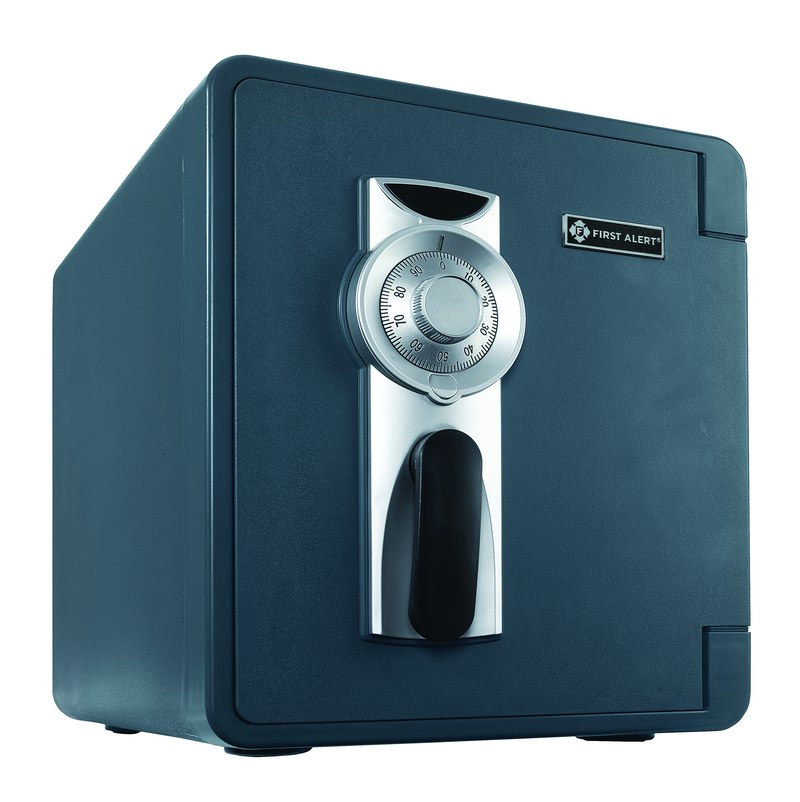
Almost every home fire safe and fire chest is rated to Class 350, which is the class for paper. That covers passports, deeds, certificates and printed records. It doesn’t automatically cover USB drives, discs or photos. Some manufacturers run a separate test for digital media and say so. First Alert, for example, states the 2087F was verified by an independent lab to protect memory sticks, CDs, DVDs and external hard drives. If you plan to store drives, look for a line like that.
What “1 hour at 1700°F” means
According to UL Solutions, its fire endurance test places the safe in a furnace that reaches about 1,000°F in roughly five minutes. The furnace then follows a controlled temperature curve for the rated time, while sensors monitor the interior. After the furnace is shut off, the safe cools, and testers open it to check that the contents are usable and don’t stick together or crumble.
So a label reading “UL Classified, 1 hour, up to 1700°F” means the furnace reached up to 1700°F over a one-hour exposure and the interior stayed within the class limit. A ½-hour rating is a shorter exposure, and the stated peak is usually lower. SentrySafe’s CHW20221 chest, for example, is rated ½ hour at up to 1550°F.
UL itself cautions that a lab exposure “may not be representative of all fire conditions.” The amount of fuel, the building’s construction and the safe’s location all matter. A longer rating simply gives you more margin.
The explosion test and the drop test
UL 72 includes two more tests that are easy to overlook on a label:
- Explosion test: this checks that the safe can survive a sudden exposure to high heat without bursting from a build-up of steam or other gases. Fire insulation contains moisture, so this is a real risk.
- Fire and impact test (optional): UL describes pulling the safe from the furnace, hoisting it 30 feet, roughly three storeys, and dropping it. Testers inspect it, return it to the furnace for up to another hour, then examine the contents, locks and fastenings. It is optional, so only some safes carry it.
Some manufacturers advertise their own impact verification through a different lab. The SentrySafe SFW123GDC, for instance, is ETL Verified to withstand a 15-foot drop during a fire and remain closed. That is a useful test, but it is not the same height as UL’s 30-foot impact test. Compare like with like.
UL vs ETL: does the lab matter?
Both UL and Intertek (ETL) are independent testing organisations, and reputable brands use both. Wirecutter, for example, notes that its picks were tested by UL or Intertek. What matters more than the logo is that the label states a duration, a temperature and the type of protection. Be wary of listings that say only “fire resistant” or “fireproof material” with no lab and no duration.
How to read water ratings
Water ratings are not standardised the way UL 72 fire classes are, so read the exact wording:
| Label wording (real examples) | What it tells you |
|---|---|
| “ETL Verified water resistance in up to 8 inches of water for up to 24 hours” (SentrySafe SFW123GDC) | Protects against standing water, such as a flooded floor, at a stated depth and time |
| “Flood damage up to 72 hours” (SentrySafe CHW20221) | Long duration; check the manufacturer’s test description for depth |
| “Waterproof for up to 24 hours under a 39-inch water depth” (First Alert 1114F listing) | Full submersion at a stated depth |
| “Waterproof even when fully submerged” (First Alert 2087F) | Submersion claim with no published duration |
Two practical points. First, water from sprinklers and fire hoses can reach a safe during a fire (First Alert’s product copy makes this point for the 2087F), so a water rating matters even if you don’t live in a flood zone. Second, a depth and a duration together are more useful than either alone.
Ratings that don’t exist (but sound like they do)
- “Fireproof.” No safe is fireproof. Every rating is for a set time and temperature.
- “Fire-resistant material.” This describes the material, not the finished safe. It is not a test result.
- Burglary claims on a fire safe. UL 72 doesn’t test locks for burglary resistance; the standard says so explicitly. Burglary ratings are a separate set of tests. A heavy door and big bolts help against casual theft, but a fire rating says nothing about how a safe resists tools.
Getting the most from a rated safe
Manufacturer manuals add a few rules that affect real-world performance:
- Store it closed and locked. SentrySafe’s CHW20221 manual says the unit should be stored closed and locked, feet down, to perform properly in a fire.
- Mind the moisture. Fire insulation holds moisture by design. SentrySafe recommends sealing delicate items such as photos and stamps in an airtight container, and sells desiccant packs for its safes.
- Some valuables need more than Class 350. SentrySafe specifically warns against storing pearls, because damage can occur well below the paper limit.
- Register the product. SentrySafe requires registration for its after-fire replacement guarantee, and SentrySafe notes that a safe that has been through a fire is typically sealed shut and must be pried open.
A 30-second label checklist
- Is a named lab (UL or Intertek/ETL) listed?
- Is there a duration and temperature, such as 1 hour at 1700°F?
- Is the class or contents stated: paper (350), or verified for digital media?
- Is there an impact or drop test, and at what height?
- Does the water rating give a depth and a duration?
- Is there an after-fire replacement guarantee, and does it require registration?
For specific models compared on these criteria, see our best fireproof safes for home documents.
Sources: ANSI/CAN/UL 72 scope (UL Standards & Engagement, edition dated January 27, 2026); UL Solutions, “Turning Up the Heat: A Sneak Peek into UL’s Fire Testing of Safes”; SentrySafe product pages and CHW20221 user manual; Amazon listing for SentrySafe SFW123GDC; First Alert 2087F specification sheet; Staples listing for First Alert 1114F; Wirecutter, “Understanding Your Safe’s Fireproof Rating.” Checked November 9, 2026.